Blog

  • The Hard Truth About Restaurant Rent (And Fixed Costs Nobody Warns You About)

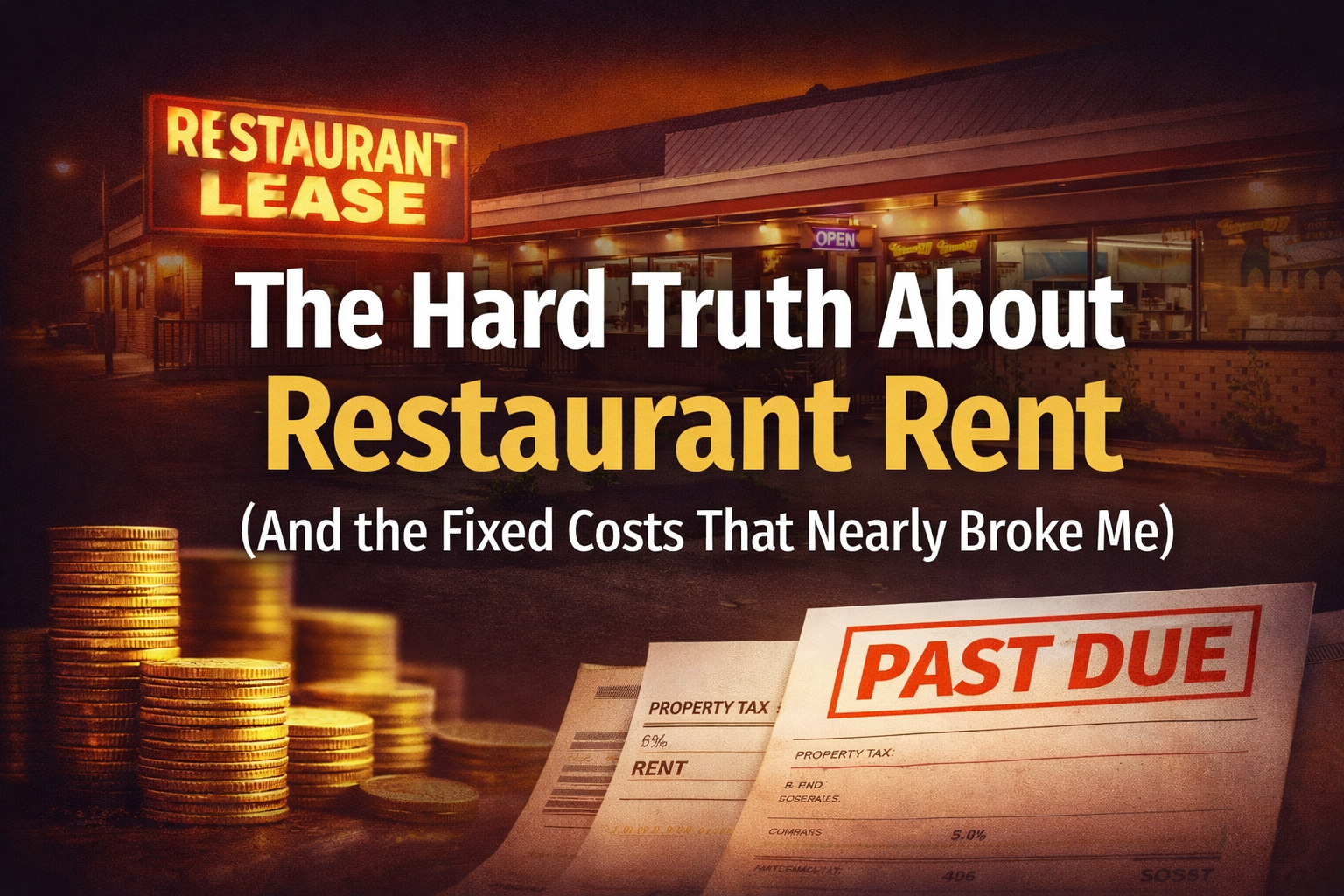
    The Hard Truth About Restaurant Rent (And Fixed Costs Nobody Warns You About)

    When I bought my restaurant, I thought the hardest part would be:

    • Learning operations
    • Improving food quality
    • Fixing management issues
    • Getting customers through the door

    I didn’t realize the real pressure would come from something much simpler:

    Fixed costs.

    Rent.
    Property tax.
    Licensing.
    Annual fees.

    Before I sell one burger, thousands of dollars are already owed.

    And that changes everything.

    If you’ve read my earlier breakdown in
    How Much It Really Costs to Start a Small Food Business in California

    you already know startup costs are heavy.

    But what nobody truly prepares you for is what happens after you open.


    My Real Fixed Costs

    Here’s my current reality:

    • $3,200 per month in rent
    • Over $8,000 per year in secured property tax
    • $800 annual California LLC tax
    • City business tax
    • Health permit fees
    • Waste and recycling fees
    • Payroll taxes
    • Insurance
    • Utilities

    That’s before debt payments.

    That’s before food cost.

    That’s before payroll.

    If you’ve read
    Is Taking a Loan to Start a Small Business a Mistake?

    you know I financed part of this purchase.

    Debt adds another fixed layer.

    And fixed layers stack quickly.


    Rent Is Not Just a Bill. It’s a Performance Requirement.

    When someone says, “$3,200 rent isn’t that bad,” they’re thinking personally.

    But in business, rent is not about affordability.

    It’s about required performance.

    If your rent is $3,200 per month and your secured property tax effectively adds another ~$700 per month, your location cost is nearly:

    $3,900 per month.

    That means your restaurant must produce enough revenue to:

    • Cover food cost
    • Cover labor
    • Cover utilities
    • Cover taxes
    • Cover debt
    • And still leave profit

    Rent does not shrink during slow weeks.

    It doesn’t care about competition.

    It doesn’t care if McDonald’s across the street is glowing brighter.

    It shows up every month.


    The Secured Property Tax Surprise

    One thing that shocked me was secured property tax.

    Over $8,000 per year.

    That’s nearly $700 per month in additional fixed cost tied to the property.

    Now combine:

    $3,200 rent
    $700 property tax equivalent

    You’re already near $4,000 monthly in location cost alone.

    Before labor.
    Before food.

    This is why I wrote
    The Hidden Government Costs of Running a Small Restaurant in California

    Because these numbers are real.

    And they matter.


    The 10% Rule I Wish I Understood

    In restaurants, a common guideline is:

    Rent should be 8%–12% of gross revenue.

    Let’s use my situation.

    If location costs are roughly $3,900/month…

    To keep that near 10%, I would need:

    About $39,000–$40,000 per month in revenue.

    That’s:

    $1,300–$1,400 per day consistently.

    Not once.
    Not occasionally.
    Consistently.

    Now let’s compare that to reality.

    If daily sales are:

    $600 → about $18,000/month
    $1,000 → about $30,000/month
    $1,500 → about $45,000/month

    At $600/day, fixed costs feel crushing.
    At $1,000/day, it’s tight.
    At $1,500/day, there’s breathing room.

    This is why I later wrote
    How Much Cash You Really Need Before Buying a Small Business

    Because volume is everything.


    Why Fixed Costs Create Emotional Pressure

    When sales are slow, it feels like:

    You’re working for the landlord.
    You’re working for the county.
    You’re working for the state.
    You’re working for the bank.

    And nothing is left.

    That emotional pressure builds fast.

    But fixed costs don’t create stress by themselves.

    They expose weak volume.

    If volume is strong, fixed costs feel manageable.

    If volume is weak, they feel like traps.


    Volume vs Price: The Real Battle

    At one point, I thought price was the issue.

    I’m located near major chains.

    McDonald’s.
    Burger King.
    Jack in the Box.

    Their signs glow brighter.
    Their prices look cheaper.

    But here’s the truth:

    Lowering prices doesn’t fix high rent.

    If only 40 customers walk in per day, math won’t work.

    If 120 customers walk in per day, math becomes possible.

    This is why I wrote
    Why Competing With McDonald’s Almost Broke Me
    (you’ll see that article soon in the series).

    It’s not about beating them on price.

    It’s about capturing enough traffic.


    The Visibility Factor

    In my case, city trees partially block my signage.

    And my sign says:

    “Chubby Freeze.”

    Not:

    “HOT BURGERS.”

    Not:

    “FRESH SHAKES.”

    That matters.

    Drivers make food decisions in seconds.

    If they don’t immediately know what you sell, they keep driving.

    Visibility directly affects volume.

    Volume determines whether fixed costs feel manageable or impossible.


    Debt Makes Fixed Costs Heavier

    If you’ve read
    Credit Cards vs Loans for Small Business

    you understand how financing structure impacts cash flow.

    Debt payments don’t wait for slow weeks.

    They stack on top of rent.

    Which is why I also wrote
    Small Business Cash Flow

    Cash flow isn’t about profit on paper.

    It’s about timing and survival.

    A business can be profitable annually and still feel broke monthly.


    Buying vs Starting From Scratch

    When I bought this restaurant, I thought I was saving time by acquiring something already operating.

    But as I explained in
    Buying a Small Business vs Starting From Scratch

    you inherit:

    • Lease terms
    • Fixed cost structure
    • Past operational issues
    • Location limitations

    You don’t get a clean slate.

    And fixed costs don’t care who signed the lease first.


    Why Restaurants Fail

    Most restaurants don’t fail because:

    • The food is bad
    • The owners are lazy
    • The idea is terrible

    They fail because:

    Fixed costs require consistent daily volume.

    If 30–50 customers walk in per day, math gets tight.

    If 80–120 walk in per day, math improves dramatically.

    This is why I also documented
    Small Business Mistakes to Avoid

    Underestimating fixed cost pressure is a major one.


    The Real Question Every Owner Should Ask

    Before signing any restaurant lease, ask:

    • How many customers per day does this location realistically support?
    • What is traffic count?
    • What is average ticket?
    • What are total fixed costs including property tax?
    • How visible is the signage from driving speed?

    Don’t just ask:

    “Can I afford this rent?”

    Ask:

    “Can this location consistently produce $1,500–$2,000 per day?”

    Because that’s what it takes to comfortably support:

    Rent.
    Property tax.
    Debt.
    Payroll.
    Taxes.


    The Hard Truth

    Fixed costs are not evil.

    But they are unforgiving.

    They do not adjust for emotion.

    They do not adjust for frustration.

    They do not adjust for competition.

    They require math.

    If volume is there, fixed costs are manageable.

    If volume is missing, fixed costs feel like suffocation.


    Final Thought

    Owning a restaurant is not just about cooking food.

    It’s about managing structure.

    Structure determines pressure.

    Pressure determines stress.

    Stress determines whether you survive long enough to grow.

    If you’re buying a restaurant, learn from my experience:

    Understand your fixed costs deeply.

    Because once the lease is signed and the keys are handed over, math becomes reality.

    And reality doesn’t negotiate.
  • Why Most Small Restaurants Struggle in Their First Year (And How to Survive It)

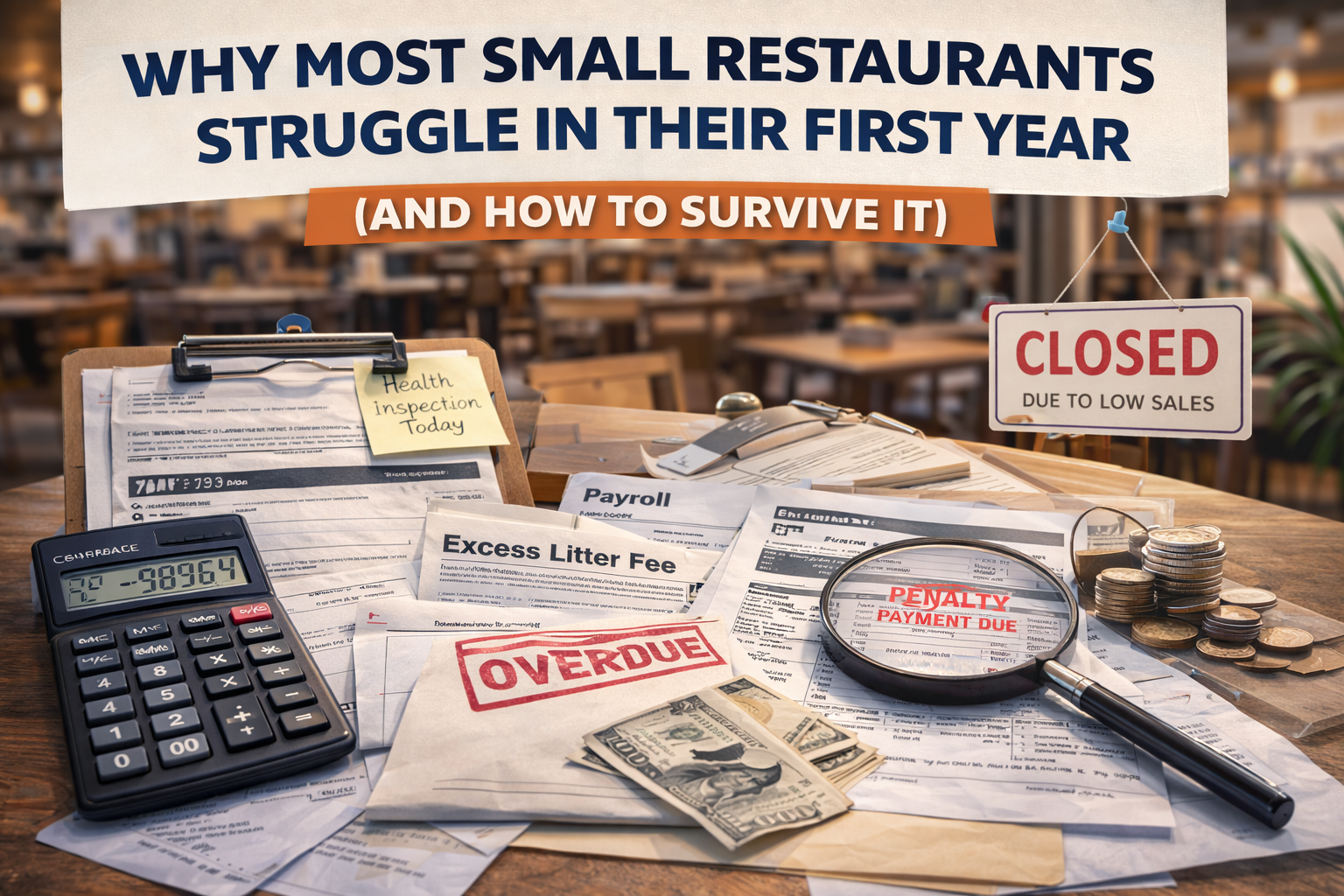
    Why Most Small Restaurants Struggle in Their First Year (And How to Survive It)

    The first year of running a small restaurant is not glamorous.

    It’s not viral.

    It’s not fast money.

    It’s not immediate freedom.

    It’s pressure.

    Most small restaurants struggle in their first year — not because the food is bad, but because expectations don’t match reality.

    If you’re planning to open or buy a restaurant, understanding this first-year pressure could save you financially and mentally.

    1. Revenue Is Almost Always Overestimated

    Before opening, numbers look clean.

    You estimate:

    • Daily sales
    • Average ticket
    • Monthly revenue
    • Growth projections

    But once you open:

    • Mondays are slower than expected.
    • Rain kills foot traffic.
    • Word-of-mouth takes months.
    • Marketing costs more than expected.
    • Customers resist price increases.

    If you inherited underpriced menu items and need to adjust them to survive, some customers push back.

    That temporary drop in sales feels heavy.

    Year one revenue rarely follows your spreadsheet.

    2. Fixed Costs Don’t Adjust to Reality

    Here’s the brutal truth:

    Your expenses don’t shrink when business is slow.

    You still owe:

    • Rent
    • Property tax (in my case nearly $8,000 per year)
    • Payroll taxes
    • Workers’ comp
    • Utilities
    • Waste management
    • Recycling compliance
    • Health permits
    • Excess Litter Fee
    • Insurance
    • Loan payments (if financed)

    These fixed costs create pressure.

    Even if your sales drop by 30%, your bills don’t.

    Government compliance alone can stack quickly, as I explained here:

    The Hidden Government Costs of Running a Small Restaurant in California

    This mismatch between variable revenue and fixed costs crushes many restaurants in year one.

    3. Cash Flow Problems Appear Faster Than Expected

    Profit and cash are not the same thing.

    You may show profit on paper.

    But still struggle to pay bills on time.

    Why?

    Because:

    • Vendors want payment weekly.
    • Payroll is due biweekly.
    • Sales tax must be filed.
    • Reinspection fees are immediate.
    • Unexpected repairs don’t wait.

    This is why I emphasize liquidity over revenue here:

    Why Poor Bookkeeping and Cash Flow Kill Small Businesses

    First-year survival is about managing timing.

    Not just making sales.

    4. Inherited Problems Multiply Stress

    If you bought an existing restaurant, year one may include:

    • Equipment failures
    • Sanitation corrections
    • Pest control issues
    • Reputation repair
    • Staff retraining
    • Lease negotiation pressure
    • Permit transfers
    • Compliance cleanup

    You’re not just operating.

    You’re rebuilding.

    Buying isn’t automatically easier than starting fresh:

    Buying an Existing Restaurant vs Starting From Scratch: The Real Risks Nobody Talks About

    Sometimes starting from zero gives you more control.

    5. Underestimating Working Capital

    Many new owners budget for:

    • Purchase price
    • Equipment
    • Initial inventory

    But they underestimate:

    • Slow months
    • Permit renewals
    • Unexpected penalties
    • Equipment repair
    • Graffiti cleanup
    • Waste compliance penalties
    • Excess Litter Fee
    • Property tax installments

    Without enough cushion, every surprise feels catastrophic.

    I explain realistic cash cushion expectations here:

    How Much Cash You Really Need Before Buying a Small Business

    Year one is not about profit.

    It’s about survival margin.

    6. Debt Magnifies Every Slow Day

    If you financed the purchase, monthly payments create psychological pressure.

    Debt removes flexibility.

    When business is slow:

    • You can’t “wait it out.”
    • You can’t experiment freely.
    • You can’t absorb mistakes easily.

    I wrote about that pressure here:

    Is Taking a Loan to Start a Small Business a Mistake?

    Debt is not evil.

    But debt + unstable revenue = anxiety.

    7. Long Hours and Burnout

    Most small restaurant owners work:

    • 10–12 hour days
    • Six or seven days per week
    • With limited staffing
    • Handling operations, cleaning, ordering, compliance, and admin

    Burnout happens quietly.

    Fatigue leads to:

    • Poor decisions
    • Missed paperwork
    • Increased stress
    • Emotional frustration

    Year one is physically demanding.

    And mentally heavier than expected.

    8. Pricing Pressure and Customer Adjustment

    Raising prices to reflect:

    • Food inflation
    • Labor costs
    • Compliance costs
    • Merchant fees
    • Insurance

    Is necessary for survival.

    But customers compare to old prices.

    They remember what things “used to cost.”

    That adjustment period can reduce volume.

    It takes time for pricing to stabilize.

    9. Marketing Doesn’t Automatically Solve It

    Many first-year owners believe:

    “If we market more, we’ll fix it.”

    Marketing helps.

    But if fundamentals are weak — pricing, margins, cost control — marketing just accelerates cash burn.

    Sustainable growth is operational, not just promotional.

    10. The Psychological Weight

    This is rarely discussed.

    When you:

    • Open at 9am
    • Close at 9pm
    • Commute daily
    • Handle inspectors
    • Read penalty notices
    • Watch sales fluctuate
    • Adjust pricing
    • Worry about payroll

    The emotional weight builds.

    And when you feel responsible for employees and customers, it intensifies.

    Ownership is not just business.

    It’s personal.

    Why Some Restaurants Survive Year One

    Because they:

    • Track numbers weekly
    • Cut waste aggressively
    • Negotiate vendors
    • Control labor tightly
    • Stay compliant
    • Maintain mental resilience
    • Build slowly instead of forcing growth

    Survival is discipline.

    Not luck.

    Practical Survival Strategy for Year One

    Here’s what truly helps:

    1️⃣ Build a 6-Month Reserve

    Before buying or opening, aim for at least six months of operating cushion.

    2️⃣ Overestimate Government Costs

    Assume:

    • Inspections
    • Fees
    • Permit renewals
    • Waste penalties
    • Compliance notices

    Will happen.

    Because they will.

    3️⃣ Monitor Cash Weekly

    Not monthly.

    Weekly.

    4️⃣ Adjust Pricing Early

    Don’t wait until you’re desperate.

    5️⃣ Control Labor

    Labor creep destroys margin faster than food waste.

    6️⃣ Protect Your Mental Health

    Rest matters.

    Clear thinking matters.

    Final Thoughts

    The first year of running a restaurant is not about getting rich.

    It’s about surviving long enough to stabilize.

    If you survive year one:

    • You gain experience.
    • You understand your numbers.
    • You refine systems.
    • You build resilience.

    Many restaurants fail because expectations were unrealistic.

    Not because effort was lacking.

    If you’re considering entering the restaurant business, start here:

    How Much It Really Costs to Start a Small Food Business in California

    Clarity before commitment is cheaper than regret.

  • The Hidden Government Costs of Running a Small Restaurant in California

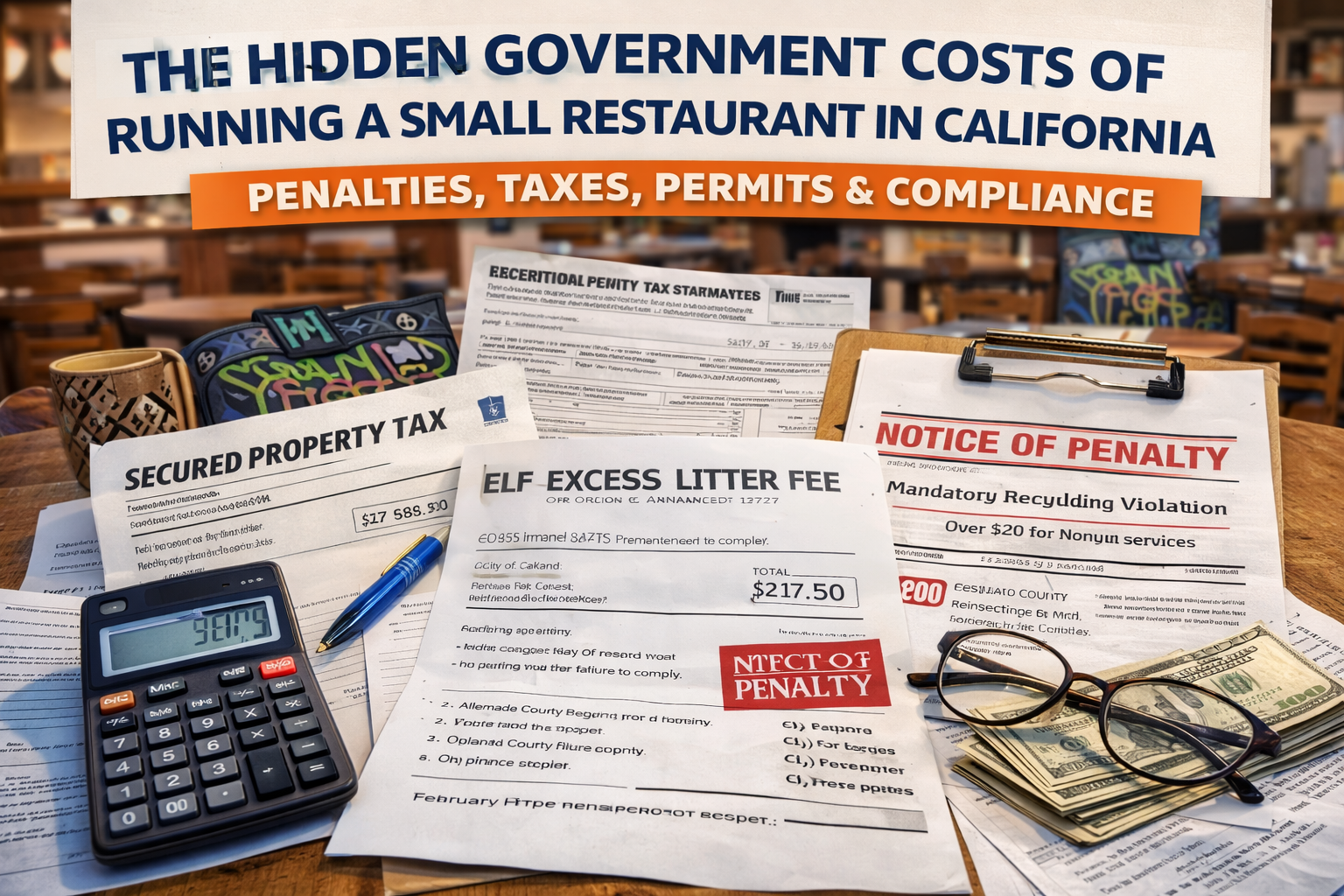
    The Hidden Government Costs of Running a Small Restaurant in California

    When people think about opening a restaurant, they think about:

    • Food

    • Rent

    • Equipment

    • Payroll

    What most people don’t think about?

    Government costs.

    Not just the business license.

    Not just the health permit.

    I’m talking about the hidden, recurring, compliance-heavy, penalty-backed costs that show up after you already bought the business.

    If you’ve read my breakdown of startup expenses in
    How Much It Really Costs to Start a Small Food Business in California

    You already know opening is expensive.

    But operating?

    That’s where the real surprise begins.


    1. Property Taxes: Almost $8,000 Per Year

    One of the first documents that really hit me was the secured property tax statement.

    For 2025–2026, the total was:

    $7,897.32

    Split into two installments of about:

    $3,948.66 each

    That’s nearly $8,000 a year.

    Before:

    • Payroll

    • Food cost

    • Utilities

    • Insurance

    • Loan payments

    Property tax doesn’t care if business is slow.
    It doesn’t care if you’re renovating.
    It doesn’t care if you just bought the place.

    It is due.

    Miss it, and penalties stack.

    This is rarely discussed in “how to start a restaurant” videos.

    But it’s real.


    2. Environmental Health Fees & Reinspection Charges

    When I took over the business, I inherited more than equipment.

    I inherited problems.

    The restaurant had cockroaches.

    The inspector noticed.

    We were forced to close for a month.

    That alone destroyed cash flow.

    (If you want to understand how cash flow pressure builds, read:

    Small Business Cash Flow.)

    After working to fix everything, the inspector had to come back.

    And guess what?

    Reinspection isn’t free.

    I received an invoice for:

    • $174.00 special service hourly rate

    • $43.50 penalty charge

    Total: $217.50

    This is separate from annual health permit fees.

    This is separate from lost revenue.

    This is separate from extermination costs.

    It stacks.


    3. Mandatory Trash & Recycling (Even If You Just Took Over)

    Here’s something I didn’t expect.

    When I bought the business, the previous owner only had regular garbage service.

    No proper recycling.

    I didn’t even know that was a violation.

    Then I received a notice from Alameda County Waste Management.

    You are legally required to have:

    • Trash service

    • Recycling service

    • Compliance with waste separation laws

    I was charged over $200 in penalties for non-compliance.

    Even though I had just taken over.

    There is no grace period for new owners.

    You inherit the compliance.

    Not just the lease.
    Not just the equipment.
    The regulatory exposure too.


    4. The Oakland Excess Litter Fee (ELF)

    Then came something called the Excess Litter Fee (ELF).

    The City of Oakland automatically classifies fast food businesses under this ordinance.

    Why?

    Because we sell food in packaging.

    According to the city:
    This fee funds litter cleanup and storm drain protection.

    Here’s what makes it heavy:

    • You must file an annual declaration.

    • You must report gross receipts.

    • Failure to pay can result in:

      • 10%–50% penalties

      • 1% monthly interest

      • $50 Failure to File fee

    • Appeals require a $67.50 filing fee

    Even if your restaurant is struggling.
    Even if you’re barely breaking even.

    The fee applies.

    This is on top of:

    • Business license

    • Health permits

    • Property taxes

    • Waste compliance

    • Fire inspection

    • Insurance

    Every layer adds administrative work and risk.


    5. Graffiti Cleanup & Neighborhood Realities

    Nobody talks about this.

    If you operate in certain parts of California — especially urban areas — graffiti becomes a recurring problem.

    Walls.
    Fences.
    Trash enclosures.
    Utility boxes near your storefront.

    Even if you didn’t cause it.
    Even if you didn’t allow it.

    It affects your property.

    And inspectors care about appearance and sanitation.

    You may need to:

    • Repaint

    • Pressure wash

    • Maintain exterior fencing

    • Keep the area free of litter

    This isn’t written clearly in startup checklists.

    But it’s part of operating reality.

    And it costs money.


    6. Administrative Burden (Time = Hidden Cost)

    Beyond money, there is time.

    Every compliance letter requires:

    • Reading

    • Understanding

    • Filing paperwork

    • Meeting deadlines

    • Tracking due dates

    If you miss a deadline:
    Penalties.

    If you misunderstand classification:
    Penalties.

    If you fail to declare properly:
    Penalties.

    And when you’re working from 9 a.m. to 9 or 10 p.m. daily,
    with only part-time employee help,
    that paperwork feels overwhelming.

    Government cost isn’t just money.

    It’s mental load.


    7. The Stacking Effect

    Let’s summarize just some of the numbers:

    • Property tax: ~$7,897

    • Reinspection: $217.50

    • Recycling penalty: $200+

    • Excess Litter Fee

    • Mandatory waste contracts

    • Permit renewals

    • Graffiti maintenance

    • Compliance filing risks

    Now imagine this happening while:

    • Sales are slow

    • Pricing adjustments are upsetting customers

    • You’re commuting daily

    • You inherited operational problems

    That’s when you understand:

    Running a small restaurant is not just about food.

    It’s about regulatory survival.


    8. Why This Matters Before Buying

    If you’re thinking about buying a business, read:

    How Much Cash You Really Need Before Buying a Small Business

    Because purchase price is not the real cost.

    Hidden obligations are.

    If you’re debating whether buying was the right move:

    Buying a Small Business vs Starting From Scratch

    These decisions affect everything.

    Especially once government costs enter the picture.


    9. This Is Not a Rant. It’s a Warning.

    California has opportunity.

    But it also has layers of regulation.

    If you are:

    • Under-capitalized

    • Underprepared

    • Or unaware of compliance stacking

    You will feel the pressure fast.

    I learned that the hard way.


    Final Thoughts

    When you hear someone say:

    “Just start a restaurant.”

    Understand this:

    You are not just opening a kitchen.

    You are entering a regulated ecosystem.

    Where:

    • Taxes are real

    • Inspections are strict

    • Waste compliance is mandatory

    • Filing deadlines matter

    • Penalties accumulate

    And none of this shows up in Instagram success posts.

    If you want the full journey from startup costs to debt to cash flow reality, explore the full series here:

    https://ifilllife.com/how-much-it-really-costs-to-start-a-small-food-business-in-california/

    Because the truth is:

    The hidden government costs are not small.

    And ignoring them is expensive.

  • Is Buying a Small Business Worth It? The Complete Truth No One Tells You

    Is Buying a Small Business Worth It? The Complete Truth No One Tells You

    Buying a small business sounds smart.

    It sounds safer than starting from scratch.
    It sounds faster.
    It sounds like you’re “skipping the hard part.”

    I believed that too.

    But after buying a small restaurant in California and experiencing the financial, emotional, and operational reality of ownership, I can confidently say:

    Buying a business can either accelerate your life…
    or financially suffocate you.

    This article breaks down everything I’ve learned — the financial math, the hidden risks, the government costs, the emotional pressure, and the truth about whether buying an existing business is actually worth it.

    If you’re thinking about buying one, read this carefully.


    Why People Buy Instead of Starting From Scratch

    There are real reasons buying an existing business is attractive:

    • Existing customers

    • Existing equipment

    • Existing licenses

    • Existing brand name

    • Immediate revenue

    • Shorter startup timeline

    Compared to opening from zero, it feels easier.

    In fact, I explained the cost differences in detail here:
    Buying a Small Business vs Starting From Scratch

    But here’s the problem most buyers overlook:

    You’re not just buying assets.
    You’re inheriting history.

    And history can be expensive.


    The Financial Reality Nobody Shows You

    When buying a small business, people focus on:

    • Purchase price

    • Down payment

    • Monthly payment

    They rarely focus on:

    • Cash flow

    • Deferred maintenance

    • Hidden compliance issues

    • Reputation damage

    • Equipment condition

    • Lease terms

    Before buying, you must understand:

    Cash flow is more important than purchase price.

    I break that down deeply here:
    Small Business Cash Flow

    A business can look profitable on paper but still struggle to survive because of timing and debt pressure.


    The Debt Trap Many Buyers Fall Into

    If you don’t have full cash, you will borrow.

    And borrowing changes everything.

    I learned this personally after navigating business financing. I explain the emotional and financial weight of that decision here:

    Is Taking a Loan to Start a Small Business a Mistake?

    Debt adds pressure:

    • Monthly fixed payments

    • Reduced flexibility

    • Less room for mistakes

    • Higher stress

    When business is slow, debt doesn’t slow down with it.

    It keeps coming.


    The Hidden Government Costs of Ownership

    When you buy a business in California (especially a restaurant), you quickly realize:

    You are now operating inside a compliance machine.

    Permits
    Reinspections
    Environmental fees
    Bag ordinances
    Food safety compliance
    Health inspections
    Waste management
    Local taxes
    Property tax implications

    Government compliance costs are often overlooked — from health inspections to environmental fees and local taxes. These expenses are rarely discussed but can significantly impact profitability.

    When you buy a business, you inherit:

    • Existing inspection history

    • Compliance issues

    • Sometimes prior violations

    • Permit renewals

    These are not optional costs.

    They are mandatory.

    And they add up quickly.


    The Emotional Cost No One Talks About

    Here’s something no spreadsheet shows you:

    Ownership changes your life.

    When business is slow:
    You feel it.

    When sales are low:
    You feel it.

    When pricing needs to increase:
    You feel the backlash.

    When customers complain:
    You absorb it.

    When inspectors walk in:
    Your stomach tightens.

    When revenue drops:
    Sleep disappears.

    Buying a business doesn’t just affect your finances.

    It affects your mental health.


    What Most Buyers Don’t Properly Evaluate

    Before buying, you should evaluate:

    1️⃣ True Monthly Revenue (Not Just Peak Months)

    Ask for:

    • 12 months minimum sales history

    • Bank statements (not just POS reports)

    • Seasonality trends


    2️⃣ Real Expense Structure

    Understand:

    • Payroll

    • Utilities

    • Rent

    • Insurance

    • Waste services

    • Food costs

    • Merchant fees

    • Property-related fees

    Many new owners underestimate operating costs.

    If you haven’t already, read:
    How Much It Really Costs to Start a Small Food Business in California

    Startup and operating costs are often higher than expected.


    3️⃣ Lease Terms

    If the lease is weak or expiring soon, your “investment” may not be secure.

    Always review:

    • Remaining term

    • Rent increases

    • CAM charges

    • Assignment clauses


    4️⃣ Equipment Condition

    Replacing:

    • Refrigeration

    • HVAC

    • Cooking equipment

    • POS systems

    Can destroy your first year profits.


    When Buying a Business Is Actually Smart

    Buying can be smart if:

    • It has strong positive cash flow

    • Debt is low or zero

    • Lease is stable long-term

    • Reputation is good

    • You understand the industry

    • You have working capital reserves

    Also read:
    How Much Cash You Really Need Before Buying a Small Business

    Many buyers fail because they only budget for the purchase price — not survival capital.


    When Buying Is Dangerous

    Buying becomes dangerous when:

    • You rely heavily on loans

    • You underestimate operating costs

    • You lack industry knowledge

    • You have no emergency reserve

    • The business has compliance issues

    • Revenue is unstable

    • You don’t verify financials properly

    Also consider reading:
    Small Business Mistakes to Avoid

    Most failures are not caused by laziness.

    They’re caused by underestimating risk.


    Buying vs Building: The Control Factor

    When starting from scratch:

    • You control the concept

    • You control branding

    • You control systems

    • You control standards

    • You build culture intentionally

    When buying:

    You inherit systems you may need to fix.

    That can be harder than building new.


    The Truth: Buying Is Not “Easier” — It’s Just Different

    Buying skips early setup.

    But it introduces new risk layers:

    • Financial history

    • Operational baggage

    • Reputation issues

    • Structural limitations

    You’re not building fresh.

    You’re renovating someone else’s decisions.


    The Question You Should Really Ask

    Instead of asking:

    “Is buying a small business worth it?”

    Ask:

    “Am I financially and emotionally prepared for ownership pressure?”

    If you are:

    It can absolutely change your life.

    If you are not:

    It can become a long-term burden.


    Final Thoughts

    Buying a small business is not a shortcut to freedom.

    It is a commitment to responsibility.

    It requires:

    • Financial discipline

    • Risk tolerance

    • Emotional resilience

    • Compliance awareness

    • Cash flow management

    • Long-term thinking

    If done right, it can build wealth.

    If done blindly, it can create stress.

    The difference is preparation.

  • What Banks Really Look for When You Apply for a Small Business Loan

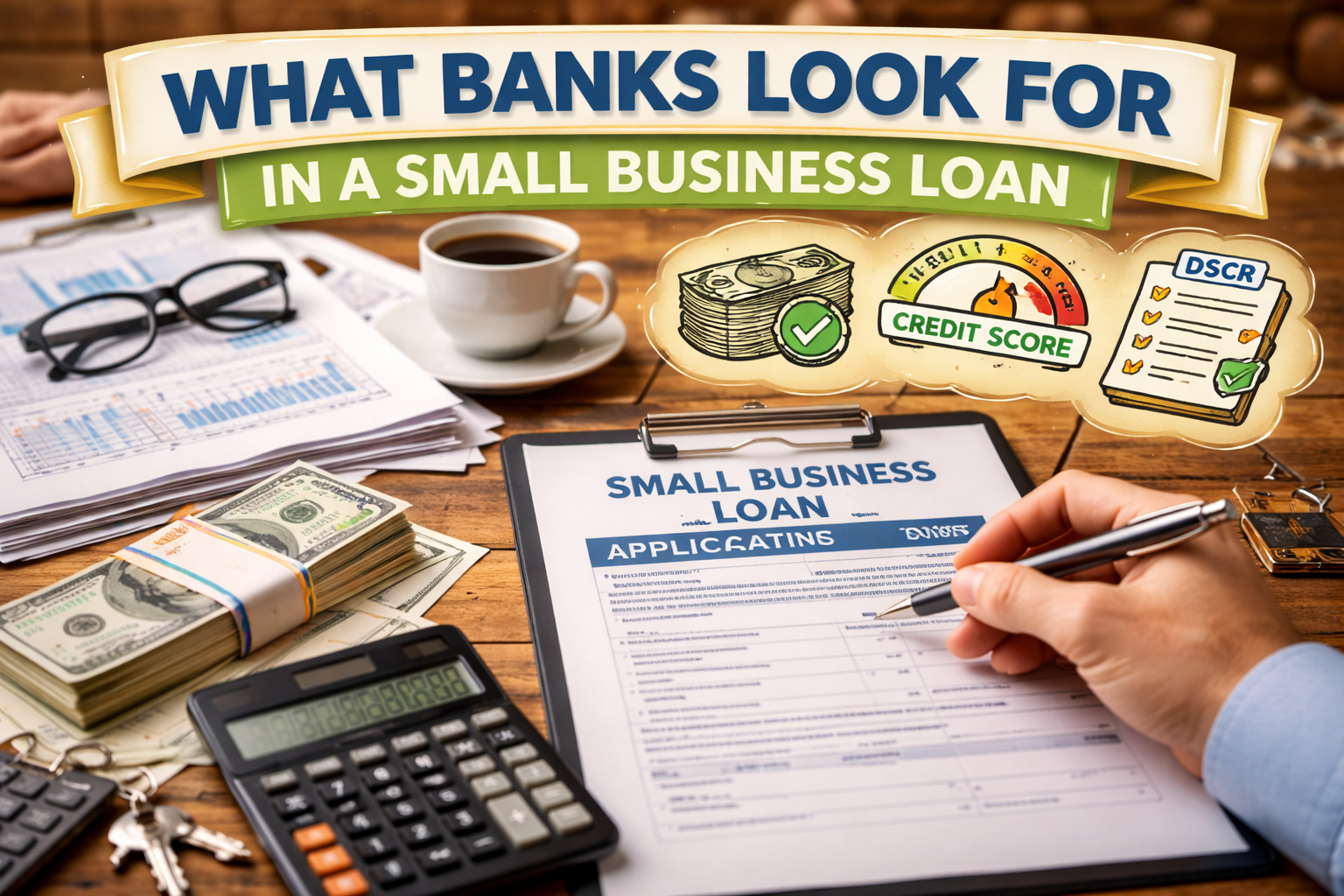
    What Banks Really Look for When You Apply for a Small Business Loan

    Most people believe getting approved for a small business loan is mostly about credit score.

    Credit matters. But it’s not the main factor.

    Banks care about risk.

    They want to know one thing:

    Will this business reliably generate enough money to repay the loan without defaulting?

    If you are applying for financing to buy a business, expand one, or stabilize operations, here’s what lenders truly evaluate — and what many applicants misunderstand.


    1. Cash Flow Is King (Not Revenue)

    Revenue looks impressive.

    Cash flow determines survival.

    Banks evaluate your ability to repay using something called Debt Service Coverage Ratio (DSCR).

    The formula:

    Net Operating Income ÷ Total Debt Payments

    If your business generates $12,000 per month and total debt obligations equal $10,000, your DSCR is only 1.2.

    Most lenders want to see at least 1.20–1.25.

    That means your business must produce 20–25% more than required loan payments.

    If your cash flow is tight, approval becomes difficult — even if revenue is high.

    This is why I emphasize cash flow over sales volume in
    Why Poor Bookkeeping and Cash Flow Kill Small Businesses.

    A busy restaurant can still be financially fragile.


    2. Operating History Under Current Ownership

    If you are buying an existing business, banks do not automatically trust prior performance.

    They want to see:

    • 1–2 years of tax returns
    • Consistent revenue under your ownership
    • Clean financial statements
    • Stable expense patterns

    Even if the previous owner made strong profits, lenders evaluate whether you can maintain those results.

    This is one of the hidden difficulties of buying instead of starting from scratch, which I discuss in
    Buying a Small Business vs Starting From Scratch.

    Buying does not instantly improve bank confidence.


    3. Personal Financial Stability

    Most small business loans require a personal guarantee.

    That means your personal finances are part of the decision.

    Banks review:

    • Personal credit score
    • Mortgage obligations
    • Existing loans
    • Debt-to-income ratio
    • Personal tax returns

    If your personal finances are strained, the bank assumes higher risk.

    Even a strong business model can be rejected if the owner’s personal obligations are heavy.

    That’s why borrowing should be evaluated carefully, as explained in
    Is Taking a Loan to Start a Small Business a Mistake?.

    Approval is not just about business optimism.


    4. Working Capital After Closing

    One major red flag for banks is when buyers use every dollar available for the down payment.

    Lenders want to see liquidity after closing.

    They want to know:

    • Can you survive slow months?
    • Can you handle unexpected inspections?
    • Can you fix equipment failures?
    • Can you manage compliance fees?

    For example, compliance issues like health inspections or reinspection fees can create unexpected costs.

    Without a cash cushion, small issues can create major financial strain.

    This is why I explain emergency reserves in
    How Much Cash You Really Need Before Buying a Small Business.

    Liquidity protects both you and the lender.


    5. Collateral and Asset Security

    Traditional banks prefer secured loans.

    That means they want collateral.

    Collateral may include:

    • Business equipment
    • Commercial property
    • Inventory
    • Personal real estate

    If the business fails, the bank wants recovery options.

    This is why some buyers turn to seller financing arrangements instead of bank loans, which I describe in
    Buying a Small Business Without a Traditional Bank Loan.

    Collateral reduces bank risk — but increases personal exposure.


    6. Industry Risk Profile

    Not all industries are treated equally.

    Restaurants, for example, are often considered higher risk because of:

    • Thin margins
    • High labor costs
    • Health compliance exposure
    • Equipment intensity
    • Economic sensitivity

    Banks may apply stricter underwriting standards to industries with higher failure rates.

    Understanding the true startup and ownership cost is essential, which I detailed in
    How Much It Really Costs to Start a Small Food Business in California.

    If your industry is volatile, your financials must be stronger.


    7. Documentation and Transparency

    Banks want organized documentation.

    Sloppy bookkeeping signals risk.

    They expect:

    • Profit & Loss statements
    • Balance sheets
    • Business tax returns
    • Personal tax returns
    • Lease agreements
    • Vendor contracts

    Inconsistent records are one of the fastest ways to get rejected.

    Many early mistakes buyers make — especially under pressure — are covered in
    Mistakes I’d Avoid If I Bought a Small Business Again.

    Preparation increases approval probability.


    8. Realistic Projections

    Banks examine whether your projections are realistic.

    Overly optimistic revenue forecasts reduce credibility.

    Lenders prefer conservative estimates supported by:

    • Historical data
    • Market research
    • Expense breakdowns
    • Cash flow planning

    Optimism does not replace math.


    Final Thoughts

    Banks are not evaluating your dream.

    They are evaluating probability.

    Strong cash flow, sufficient liquidity, stable personal finances, and realistic projections improve your chances.

  • Buying an Existing Restaurant vs Starting From Scratch: The Real Risks Nobody Talks About

    Buying an Existing Restaurant vs Starting From Scratch: The Real Risks Nobody Talks About

    When I decided to enter the restaurant business, I believed buying an existing business would be easier than starting from scratch.

    It already had equipment.
    It already had customers.
    It already had a location.

    On paper, it looked like a shortcut.

    But what I learned is this:

    Buying an existing restaurant does not remove risk.
    It simply changes the type of risk you inherit.

    If you’re deciding between buying an existing restaurant or starting your own from zero, here are the realities no one explains clearly.


    The Illusion of “Turnkey”

    When you buy an existing restaurant, it feels like everything is already built.

    The kitchen is there.
    The permits exist.
    The menu is designed.

    But what you don’t see immediately are the hidden layers underneath:

    • Pricing mistakes

    • Operational problems

    • Vendor relationships

    • Reputation damage

    • Health compliance issues

    • Staff culture

    • Old customer expectations

    Starting from scratch is difficult because you build everything.

    Buying an existing restaurant is difficult because you must fix everything while keeping it running.


    What I Inherited (That I Didn’t Expect)

    When I purchased the restaurant, I did not fully understand what I was stepping into.

    The business had been poorly managed before.

    There were sanitation problems.

    The restaurant had a serious cockroach issue that I didn’t know about at the time of purchase.

    Soon after taking over, the health inspector came and identified the problem.

    We were forced to close for about a month to fix it.

    That meant:

    • No revenue

    • Ongoing expenses

    • Stress

    • Paying for pest control

    • Paying for reinspection

    The county required a reinspection, which cost around $200.

    Later, we also received a special service charge and penalty totaling about $217.50.

    These are the kinds of costs that don’t show up in a sales listing.


    Hidden Financial Pressure After Purchase

    Many people think the purchase price is the main cost.

    It isn’t.

    After buying the business, I invested roughly $130,000 more to improve the location:

    • Opening dine-in

    • Fencing the property

    • Upgrades and repairs

    On top of that, I structured the purchase as:

    • $70,000 down

    • $2,500 monthly payments until fully paid

    • No interest

    Even without interest, that $2,500 monthly payment is real pressure.

    And financing decisions directly affect cash flow, which I explain in
    Why Poor Bookkeeping and Cash Flow Kill Small Businesses.

    When revenue is slow, fixed payments don’t disappear.


    Starting From Scratch: Different Risks

    If you start from zero, you control:

    • Branding

    • Pricing

    • Systems

    • Sanitation

    • Hiring culture

    • Customer expectations

    You don’t inherit past mistakes.

    But you face different challenges:

    • Full equipment cost

    • Full build-out cost

    • Permit approvals from zero

    • No existing customers

    • No revenue history

    Starting fresh can cost more upfront.

    Buying existing can cost more emotionally and operationally.


    Pricing Shock and Customer Expectations

    One of the hardest parts after buying the restaurant was adjusting prices.

    For example:

    A hamburger was priced at $6.50.

    That may sound attractive to customers, but it wasn’t sustainable with:

    • Higher food costs

    • Labor costs

    • Taxes

    • Compliance fees

    • Utilities

    • Property taxes

    When I increased prices to reflect real costs, customers needed time to adjust.

    Some left.

    Sales were already slow, so raising prices added pressure.

    This is something most buyers don’t calculate:

    Inherited pricing habits can hurt profitability.


    The Emotional Weight

    Buying an existing restaurant is not just a financial decision.

    It becomes your life.

    I commute daily from Vallejo and pay bridge tolls and gas.

    I work from 9 AM until 9 or 10 PM.

    My employee works limited hours.

    Most responsibilities fall on me:

    • Opening

    • Closing

    • Inventory

    • Ordering

    • Cleaning

    • Financial management

    When business is slow, the emotional weight feels heavier.

    Buying an existing business does not guarantee immediate income.

    Sometimes, it guarantees immediate responsibility.


    Government and Compliance Reality

    Owning a restaurant in California means constant compliance.

    For example:

    • Bag ordinances

    • Disposable foodware regulations

    • Environmental health permits

    • Property taxes (around $7,897 annually in two installments)

    • Reinspection fees

    • Special service charges

    These are fixed obligations.

    They do not adjust based on how busy your restaurant is.

    This is why I explained in
    How Much It Really Costs to Start a Small Food Business in California
    that startup and ownership costs go far beyond equipment and rent.


    When Buying Makes Sense

    Buying an existing restaurant can still be smart if:

    • Financial records are clean

    • Health inspections are solid

    • Equipment condition is verified

    • Pricing supports profit

    • Lease terms are favorable

    • You inspect deeply before signing

    Due diligence is everything.


    Final Thoughts

    Buying an existing restaurant is not automatically easier.

    Starting from scratch is not automatically safer.

    Both paths require:

    • Capital

    • Emotional strength

    • Cash flow management

    • Realistic projections

    • Long-term endurance

    The real mistake is assuming either path is easy.

    If you’re considering borrowing to fund a purchase, I share my honest experience in
    Is Taking a Loan to Start a Small Business a Mistake?

    And if you’re trying to understand the numbers behind survival, read
    Why Poor Bookkeeping and Cash Flow Kill Small Businesses.

    Because ownership is not just about buying a business.

    It’s about surviving it.

  • How Much Cash You Really Need Before Buying a Small Business

    How Much Cash You Really Need Before Buying a Small Business

    When people talk about buying a small business, the focus is usually on the purchase price.

    That’s a mistake.

    What matters just as much — sometimes more — is how much cash you have available after the deal closes. From my experience, not having enough cash creates pressure, stress, and bad decisions early on.

    Here’s what I wish I had understood before buying a small business.


    The Purchase Price Is Only the Starting Point

    Buying a business doesn’t end when the money changes hands.

    Right away, you start paying for:

    • Rent

    • Utilities

    • Payroll

    • Inventory

    • Repairs

    • Permits and fees

    Even if the business is already operating, cash goes out fast.

    I learned this while breaking down the real costs in How Much It Really Costs to Start a Small Food Business in California.


    Working Capital Is Not Optional

    Working capital is the cash you use to keep the business running day to day.

    You need it for:

    • Slow weeks

    • Unexpected repairs

    • Delayed permits

    • Inventory shortages

    Without working capital, every expense feels like an emergency.

    This is where many buyers underestimate how fragile the early months can be.

    Slow Business Early Is More Common Than People Admit

    One of the hardest parts of buying a small business is how slow things can feel at the beginning.

    Even after taking over, improving operations, and reopening, sales don’t always bounce back right away. Customer habits take time to return, and momentum doesn’t reset overnight—especially if the business was disrupted or closed for any period.

    This is why having enough cash matters so much. Slow early sales don’t always mean the business is broken. Sometimes they simply mean the business is restarting from zero while expenses continue at full speed.

    Without working capital, slow months can feel overwhelming. With it, they become part of the transition rather than a crisis.


    You Need an Emergency Buffer (Even If Things Look Good)

    Something will go wrong.

    Equipment breaks. Inspections get delayed. Sales fluctuate.

    Having an emergency buffer:

    • Reduces stress

    • Prevents rushed borrowing

    • Gives you time to make better decisions

    Many of the mistakes I talk about in Mistakes I’d Avoid If I Bought a Small Business Again came from not having enough margin for error.


    Debt Payments Shrink Your Real Cash

    Loans don’t just cost money — they reduce flexibility.

    Monthly payments:

    • Limit how much cash you can reinvest

    • Add pressure during slow periods

    • Affect every decision you make

    I explain more about how borrowing changed my experience in Is Taking a Loan to Start a Small Business a Mistake?.


    Cash Flow Determines How Long You Can Survive

    Cash flow isn’t about profit on paper.

    It’s about timing:

    • When money comes in

    • When bills are due

    • How long you can operate without growth

    Poor cash flow makes even good businesses feel like they’re failing. I explain why this happens in Why Poor Bookkeeping and Cash Flow Kill Small Businesses.


    So, How Much Cash Is “Enough”?

    There’s no single number, but a safer approach is to have:

    • 3–6 months of operating expenses

    • Extra funds for repairs and upgrades

    • A buffer that covers loan payments during slow months

    Buying a business without this cushion turns small problems into big ones.


    Final Thoughts

    Cash doesn’t guarantee success, but a lack of cash almost guarantees stress.

    If you’re thinking about buying a small business, plan beyond the purchase price. The money you keep available after closing often matters more than the deal itself.


    Disclaimer

    This article is based on personal experience and is for educational purposes only. It is not financial advice.

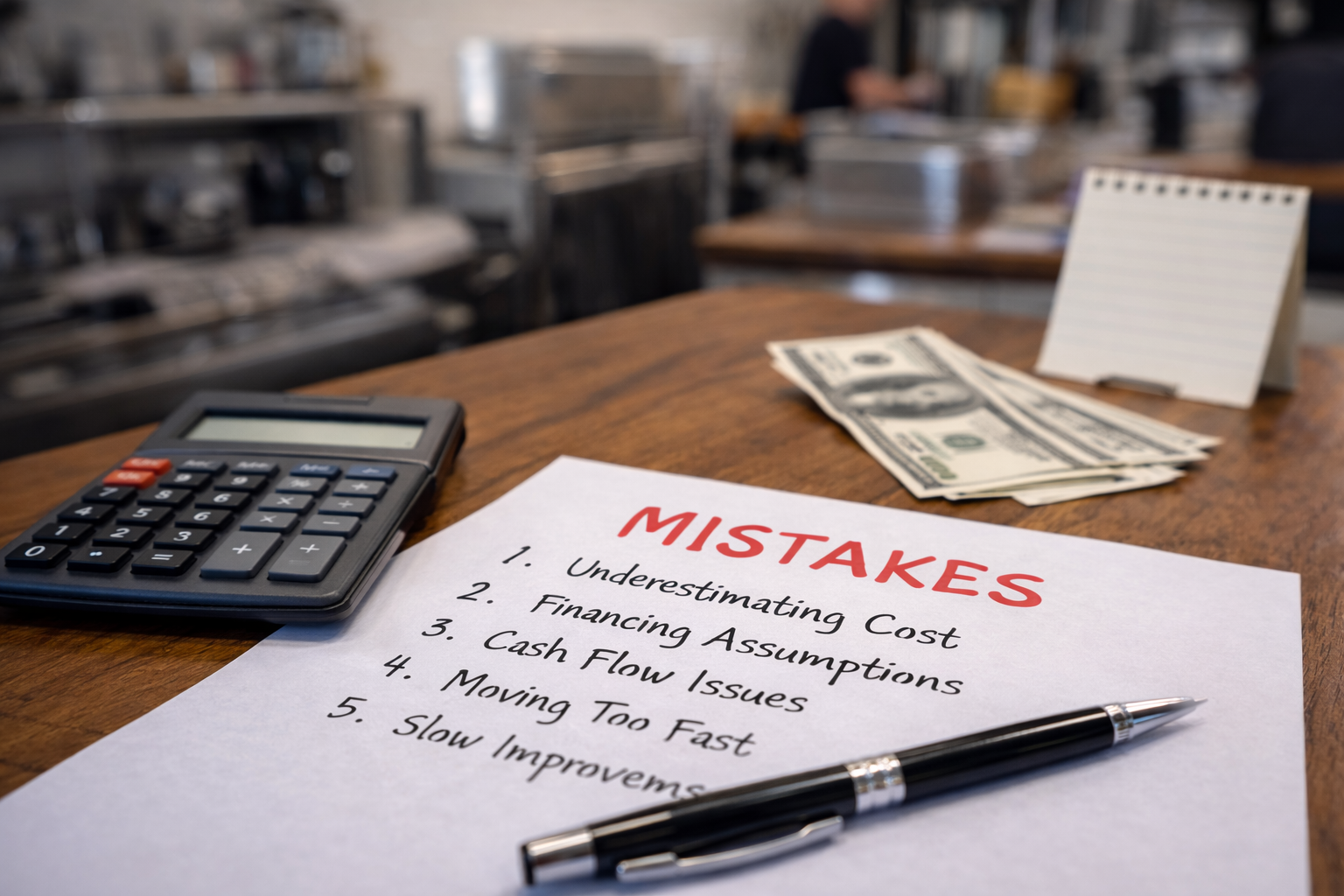
  • Mistakes I’d Avoid If I Bought a Small Business Again

    Mistakes I’d Avoid If I Bought a Small Business Again

    Buying a small business is exciting. It feels like a shortcut compared to starting from zero.

    But excitement can hide risks.

    After going through the process myself, there are several mistakes I would avoid if I had to do it all over again. This post isn’t about regret. It’s about clarity and lessons learned through real experience.


    Mistake #1: Underestimating the True Cost

    I focused too much on the purchase price and not enough on everything that comes after.

    Beyond buying the business, there were:

    • Repairs and upgrades

    • Permits and compliance costs

    • Unexpected delays

    • Time without full operations

    The real cost of ownership was much higher than I expected. I explain those hidden costs in How Much It Really Costs to Start a Small Food Business in California.


    Mistake #2: Assuming Financing Would Be Simple

    I believed financing would fall into place once I found the right business.

    That wasn’t the case.

    Banks, lenders, and traditional options required more history, paperwork, and time than I expected. Approval wasn’t guaranteed, and delays created pressure.

    I explain that reality more clearly in Is Taking a Loan to Start a Small Business a Mistake?.


    Mistake #3: Not Fully Understanding Cash Flow Early

    I underestimated how much cash flow would affect daily decisions.

    Monthly payments don’t wait for slow weeks. Expenses don’t pause. When cash flow is tight, even good decisions feel stressful.

    Understanding this earlier would have changed how I planned. I break this down in Why Poor Bookkeeping and Cash Flow Kill Small Businesses.


    Mistake #4: Moving Too Fast Without a Safety Buffer

    Once the deal started moving, everything felt urgent.

    I felt pressure to:

    • Finalize agreements quickly

    • Invest early

    • Fix problems immediately

    Without a strong buffer, every unexpected issue felt heavier. Slowing down and planning for uncertainty would have reduced stress.


    Mistake #5: Expecting Improvements to Pay Off Quickly

    Improvements are important, but results take time.

    Renovations, changes, and upgrades don’t translate into instant returns. Growth is slower than expected, especially in the beginning.

    Buying the business itself was only part of the journey, which I explain in How I Bought a Small Business Without a Traditional Bank Loan.


    Final Thoughts

    Buying a small business can be rewarding, but it’s rarely simple.

    If I could do it again, I wouldn’t avoid the process — I would approach it with better expectations, more patience, and clearer planning.

    Mistakes don’t mean failure. They mean experience. And experience changes how you make decisions the next time.


    Disclaimer

    This article is based on personal experience and is for educational purposes only. It is not financial advice.

  • How I Bought a Small Business Without a Traditional Bank Loan

    How I Bought a Small Business Without a Traditional Bank Loan

    When people talk about buying a small business, the advice usually sounds simple:
    get a bank loan, have strong financials, and everything works out.

    That wasn’t my experience.

    I bought a business without a traditional bank loan, and the process was far from straightforward. This post shares what really happened, what worked, and what I learned along the way.

    I share more about the risks of borrowing in Is Taking a Loan to Start a Small Business a Mistake?


    How I Found the Business

    The business I bought was listed through a private sale online.

    There was no broker office, no polished presentation, and no guarantee that financing would be easy. It was a real opportunity, but also a real risk.

    At the time, traditional lenders were not willing to move quickly, and I didn’t yet have operating history under my ownership.


    The Deal Structure That Made It Possible

    Instead of a traditional loan, the deal was structured through a private agreement.

    Part of the purchase price was paid upfront. The rest was agreed to be paid monthly over time, without interest. This made the purchase possible when bank financing was not available.

    While this helped move the deal forward, it also created long-term obligations that needed to be planned for carefully.


    Why Traditional Financing Didn’t Work at First

    Banks and traditional lenders usually want:

    • Business history under current ownership

    • Clean financial records

    • Predictable cash flow

    • Time for review and approval

    Buying an existing business doesn’t automatically solve these issues. Without history under my ownership, approval was difficult.

    Waiting months for financing was not realistic for this situation.


    Investing Beyond the Purchase Price

    Buying the business was only the beginning.

    After the purchase, additional money was invested to improve operations and prepare the business for long-term growth. These investments were necessary, but they added pressure early on.

    This is something many buyers underestimate — the purchase price is rarely the final cost.


    The Risks That Come With Private Deals

    Private financing and seller agreements can be helpful, but they come with risks:

    • Monthly payments don’t pause when business slows

    • Personal finances are often tied to the deal

    • There is less flexibility if problems arise

    These risks don’t mean private deals are bad, but they do require clear planning and realistic expectations.


    How This Changed How I Think About Financing

    Going through this process changed how I view financing decisions.

    It reinforced that:

    • Speed often matters more than ideal terms

    • Financing choices affect daily stress, not just numbers

    • Cash flow matters more than projections

    • Every deal has trade-offs

    Understanding those trade-offs early makes a difference.

    Financing decisions like this directly affect cash flow, which I explain in this post about bookkeeping and cash flow.


    Final Thoughts

    Buying a small business without a traditional bank loan is possible, but it’s not easy.

    Private deals can open doors when banks say no, but they also shift risk onto the buyer. The key lesson is not whether this approach is right or wrong — it’s understanding what you’re committing to before moving forward.


    Disclaimer

    This article is based on personal experience and is for educational purposes only. It is not financial advice.

  • Credit Cards vs Loans: How I Ended Up Financing My Business

    Credit Cards vs Loans: How I Ended Up Financing My Business

    When I decided to buy a small business, financing felt overwhelming almost immediately.

    Everyone had advice. Banks suggested one path. Online lenders suggested another. Credit cards were easy to access but risky. Loans sounded safer, but approval was slow and uncertain.

    This post shares what I learned by comparing those options through real experience.

    I explained more about the risks of borrowing in Is Taking a Loan to Start a Small Business a Mistake?


    Why Credit Cards Are Often the First Option

    Credit cards are usually the fastest way to access money.

    Many business owners turn to them because:

    • Approval is quick

    • There is no long application process

    • Funds are available immediately

    • There is no waiting period

    For someone trying to move fast, this convenience is tempting. The downside, however, is interest. Balances can grow quickly, especially if cash flow is inconsistent.


    Why Traditional Loans Aren’t Always Available

    Loans often sound like the smarter choice.

    Lower interest rates and longer repayment terms make them attractive. But approval usually depends on things many new owners don’t have yet:

    • Strong business history

    • Clean, organized financial records

    • Consistent cash flow

    • Time to wait for approval

    Buying an existing business does not always solve this problem if ownership history is short.


    The Reality of Government-Backed Loans

    Government-backed loans are often recommended as the best option.

    In reality, the process can be long and complicated. It typically involves extensive paperwork, long waiting periods, and no guarantee of funding. Many business owners reach the end of the process without actual approval, especially when business history is limited.

    When timing matters, waiting months is not always realistic.


    Why Speed Often Wins Over Cost

    One of the biggest lessons I learned is that speed comes at a price.

    Faster financing options usually:

    • Cost more in interest

    • Require stronger personal guarantees

    • Increase pressure outside the business

    Sometimes the “best” option on paper isn’t the best option in real life when decisions need to be made quickly.


    How Financing Choices Affect Cash Flow

    Every financing decision affects monthly cash flow.

    Payments do not adjust when sales slow down. Interest continues to accumulate. That pressure can shape daily decisions and long-term planning.

    Financing decisions directly affect cash flow, which I explain in this post about bookkeeping and cash flow.


    What I Learned From Comparing Options

    Looking back, I learned that:

    • Easy money is rarely cheap

    • Approval does not mean affordability

    • Personal guarantees increase risk

    • Cash flow should guide financing decisions

    There is no single “right” option. Every choice comes with trade-offs.


    Final Thoughts

    Credit cards and loans can both help a business move forward. But they carry different risks, timelines, and pressures.

    Understanding those differences before choosing can prevent long-term stress. Financing should support the business — not control it.


    Disclaimer

    This article is based on personal experience and is for educational purposes only. It is not financial advice.

Share via
Copy link
Powered by Social Snap